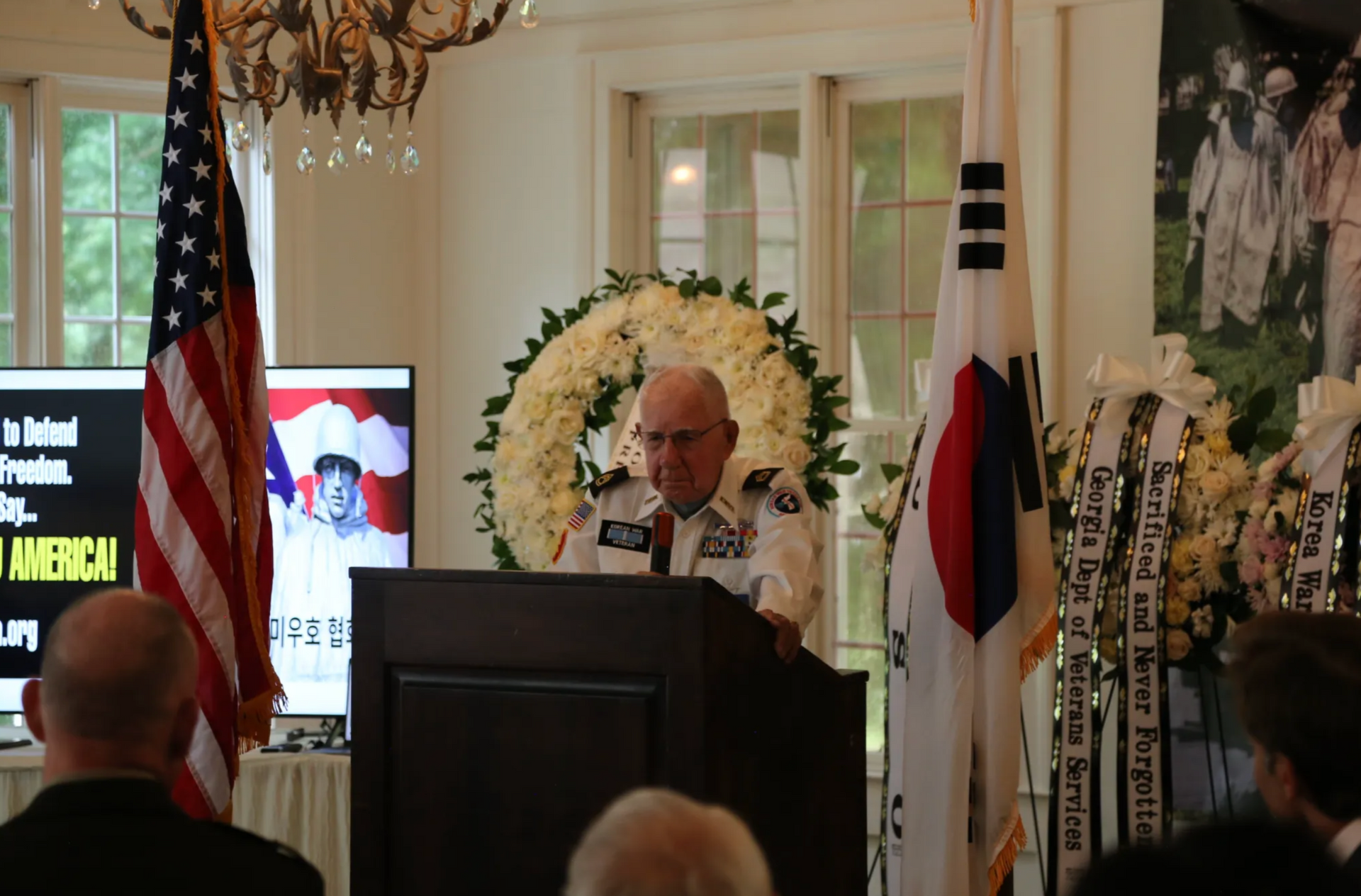
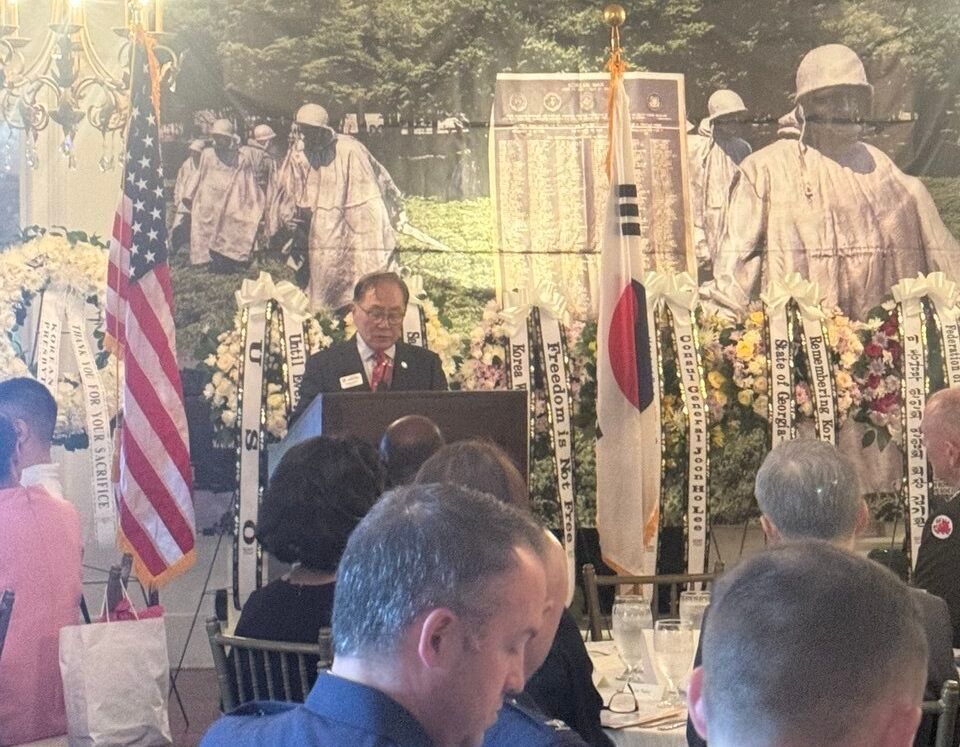
박선근 회장, 서울에 유엔 참전용사 기념공원 조성 추진

Sunny K Park • May 7, 2026

도심 3에이커 규모 구상... 3500만불 모금 목표 "기업 많지만 100만명 이상 소액 모금 바람직"
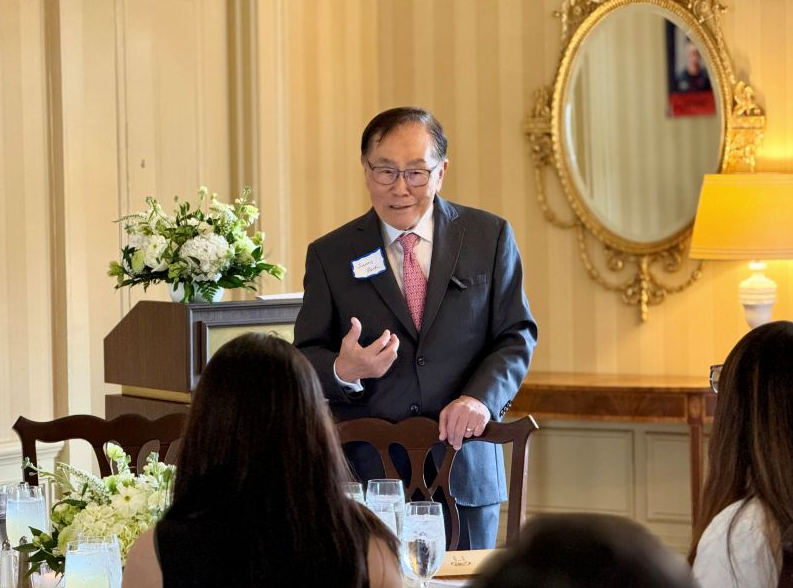
지난 1일 체로키 타운 앤 컨트리 클럽에서 열린 '위대한 미국 장학재단' 장학금 수여식에서 박 회장이 장학생들을 격려하고 있다. 윤지아 기자

한미동맹 증진을 위해 활동하는 한미우호협회의 박선근 회장이 서울에 세계 최대 규모의 유엔 참전용사 기념공원을 건립하기 위한 프로젝트를 진행 중이라고 밝혔다.


‘대한민국 한국전 참전용사 한미추모사업회’(이사장 이영훈 목사)와 ‘미국 한국전 유엔 참전용사 기념재단(이사장 존 틸럴리)’은 지난 3월 워싱턴 D.C.에서 공동회의를 갖고 한국전쟁 당시 대한민국을 수호한 유엔군 장병들의 헌신과 희생을 기리고, 역사적 진실을 보존하며, 한미동맹을 상징하는 기념공원을 서울에 조성한다는 논의를 가졌다.


운영위원장을 맡은 박선근 회장은 1일 기자와의 통화에서 “그동안 정부와 기업 차원에서 서울에 유엔군 추모시설을 건립해야 한다는 의견을 내왔지만, 오랫동안 움직임이 없어 나라도 시작해야겠다 싶었다”며 “양국에서 선망받는 지도자들이 동참하고 있다”고 전했다. 그에 따르면 한국측에서는 이영훈 여의도 순복음교회 담임목사, 엄홍길 명예회장 등이 나섰으며, 미국측에서는 전 주한미국대사, 전 유엔군 사령관 등이 참여하고 있다.


그에 따르면 서울 도심 기념공원 건립 프로젝트는 약 3년 계획으로 진행되고 있으며, 모금을 막 시작했다. 모금 목표액은 3500만 달러. 가장 먼저 해결해야 할 문제는 서울 도심에 땅을 찾는 것이다. 공원 규모는 3에이커(약 4000평) 정도로 구상 중이다.


박 회장은 “땅 유치에 애쓰고 있다. 워싱턴 D.C.에도 제일 좋은 곳에 한국전 참전용사 기념공원이 있듯이, 이에 버금가는 위치를 위해 정부와 얘기 중”이라고 밝혔다. 현재는 미군부대가 있던 용산공원과 광화문 경복궁 옆 땅이 가장 유력한 후보지라고 박 회장은 전했다. 


그는 이어서 한미 양국에서 진행되는 모금운동에많은 사람이 참여하는 것이 가장 중요하다고 강조했다. 박 회장은 “자발적으로 참여하겠다는 기업이 많았지만, 한국인들이 많이 참여하는 것이 무엇보다 의미가 있다”며 각 1000원씩이라도 100만명 이상이 모금하는 것이 목표라고 말했다. 


그는 “많은 한국인이 행동으로 감사함을 표현한다면 돌아가신 참전용사들이 하늘에서 흐뭇해할 것”이라며 마음을 행동으로 표현할 기회를 제공하고 싶다고 전했다. 운영위 측은 오는 10월 서울에서 걷기대회를 열고 모금운동을 이어나갈 계획이라고 밝혔다.


박 회장은 한국전 참전용사들의 희생을 기리는 일에 앞장서왔다. 애틀랜타에서도 1991년부터 매년 참전용사들을 초청해 6·25 정전협정 기념 오찬을 열고 있으며, 미국 주요 도시에 한국전 참전용사들에게 감사를 전하는 빌보드 광고를 내고 있다.


윤지아 기자


Source: https://www.koreadaily.com/article/20260501154824546
By Sunny K Park May 7, 2026
A newly formed foundation is working to build what could become the world's largest U.N. Korean War memorial — a permanent tribute to the 22 nations that answered the call in 1950.
By Sunny K Park April 27, 2026
박선근 회장은 “한국전 참전용사들은 누군가의 아들이자 가족이었다”며 “그들의 희생을 기리는 일은 국가적 책무″라고 강조했다. [사진 한미우호협회]
By Sunny K Park January 24, 2026
By Sunny Park Sunny Park was born in 1942 in Seoul, South Korea. After coming to the United States in 1967 and gaining full citizenship in 1974, he became a successful businessman and an active member of his community. As a relative newcomer to this country, he is concerned that America’s youth are not being taught, and consequently do not fully appreciate, the principles their forbearers fought for in creating the freest nation on Earth and how fortunate they are to be Americans. As an immigrant, I have personally learned and benefitted from the tremendous value of this great country, the United States of America. I think it can be summarized as follows: • Freedom — A people willing to die to maintain it. • Pioneering spirit — Not just exploration, but an innate ability to lead and show others. • Work ethic — Celebration in the results of hard work. • Preservation — Keeping a history of achievements, learning from it, and making improvements for a better future. During the first few years of my life in the United States, I was focused only on what was best for me. I spent all of my time on myself; I studied only for myself; I earned money only to satisfy myself; I learned those things which were only for the betterment of myself. That was my attitude until I became a citizen of this country. In order to become a citizen of the United States, I, like every other immigrant seeking citizenship, had to take a test to exhibit an understanding and appreciation for the institutions and principles of this country. I was asked to answer questions regarding my understanding of and willingness to support the duties and responsibilities of being an American. These questions, and the significance they entail, are a standard part of a citizenship application. For example, I was asked if I would take an oath of allegiance to my new country and if I would fight all enemies of the United States — even if the enemy were my home country. I was tested on my knowledge of the history, government, laws and culture of the United States. It was not a difficult test compared to those I had taken in college, but it was the beginning of a tremendous change in my life. As I prepared for this test with very limited study materials, I discovered that the answers to the questions were not difficult, but the new, peripheral knowledge I gleaned was very fresh and invigorating to me. It gave me tremendous delight to learn about and see the value of this country, her great resources, and the many reasons that American citizens enjoy such broad freedoms and privileges . . . which were soon to be mine. I was overwhelmed with an appreciation for the pioneers of this country, for their vision of the future, with their sole purpose of making this not only the greatest country in the world, but the greatest place in the world for a person to live. From that moment on, I decided to dedicate my life not just to myself and my family, but to my new country as well. As I was sworn in as a new citizen, I thought to myself that not only had I gained the blessings of American citizenship, but that America had just gained its most patriotic citizen ever. Since the day I took my citizenship test, I have continuously thought, “What if every citizen were asked to answer those same questions that I faced, or were asked to periodically study the material I studied? Would that instill in them the sense of dedication and patriotism that it did in me? Would it focus us on our basic national values of hard work and moral correctness?” I have met so many Americans, fortunate to have been born American, who know history but fail to grasp the advantages, duties and responsibilities of their citizenship. When I see the lack of respect many Americans have for our country and for what she stands, especially the younger generation, I become pessimistic about our future. It makes me quite angry to hear even a few Americans complain about their country while failing to appreciate the many blessings of just being an American. I’d like to help this country preserve its historic values and prevent them from vanishing completely. I feel very strongly that this must be God’s reason for sending me to America. If we cannot require all citizens to study and understand the value of American citizenship, then perhaps we could at least require high school students to pass a test, similar to the citizenship test I had to take, which might impart in them the same sense of appreciation and patriotism with which I was left. This test should become a requirement for graduation from our high schools. You take the test. See how you do. And be thankful for your great country. Sample Questions from the U.S. Citizenship Test 1. Why did the Pilgrims come to America? 2. Why did the people in the Colonies revolt against the King of England? 3. What is the basic belief of the Declaration of Independence? 4. What are the first ten Amendments to the United States Constitution called? 5. What are some rights that are guaranteed by the United States Constitution? 6. Why do we have three branches of government (legislative, executive, and judicial)? 7. How many Senators are there in the United States Senate? 8. Name the thirteen original states. 9. How can Congress override a Presidential veto? 10. Who has the power to declare war? Answers 1. For religious freedom. 2. Because they were required to pay taxes, but had no right of vote. 3. All men created equal. 4. The Bill of Rights. 5. The people are guaranteed the right of freedom of religion, freedom of assembly, freedom of the press, and the freedom to vote. 6. To balance the power within the government so that one branch of government does not get too powerful. This system is called checks and balances, and it was adopted by our founders to avoid the “King George” experience. 7. 100 Senators: two from each state. 8. Connecticut, New Hampshire, New York, New Jersey, Massachusetts, Pennsylvania, Delaware, Virginia, North Carolina, South Carolina, Georgia, Rhode Island and Maryland. 9. By a two-thirds majority vote. 10. The Congress Sunny Park is a member of the Board of Governors of the Georgia Public Policy Foundation. Nothing written here is to be construed as necessarily reflecting the views of the Georgia Public Policy Foundation or as an attempt to aid or hinder the passage of any bill before the U.S. Congress or the Georgia Legislature. © Georgia Public Policy Foundation (July 4, 1996) Permission is hereby given to reprint this article, with appropriate credit given. source: https://www.georgiapolicy.org/news/why-our-high-school-graduates-should-take-a-citizenship-test/